
How Poor Sleep Is Affecting Your Teen's Mental Health, Mood, and School Performance
TL; DR
Most teenagers need eight to ten hours of sleep and get far less, and the gap does more damage than most parents realize. When a teen runs short on sleep, the first thing to go is emotional regulation. This is why an exhausted teen is so quick to snap, spiral, or fall apart over something small. Focus, memory, and mood follow close behind. What makes this especially hard to untangle is that sleep and anxiety fuel each other in a cycle that tightens over time. Poor sleep makes anxiety worse, and anxiety makes sleep harder to come by. Better habits help, and targeting screens and a consistent schedule is the right place to start. When the sleeplessness persists despite good habits, or arrives hand in hand with worry and low mood, something deeper is usually driving it. That's when therapy for teens can help quiet the mind that won't let the body rest, and break the cycle from the inside out.
The Link Between Poor Sleep and Teen Mental Health
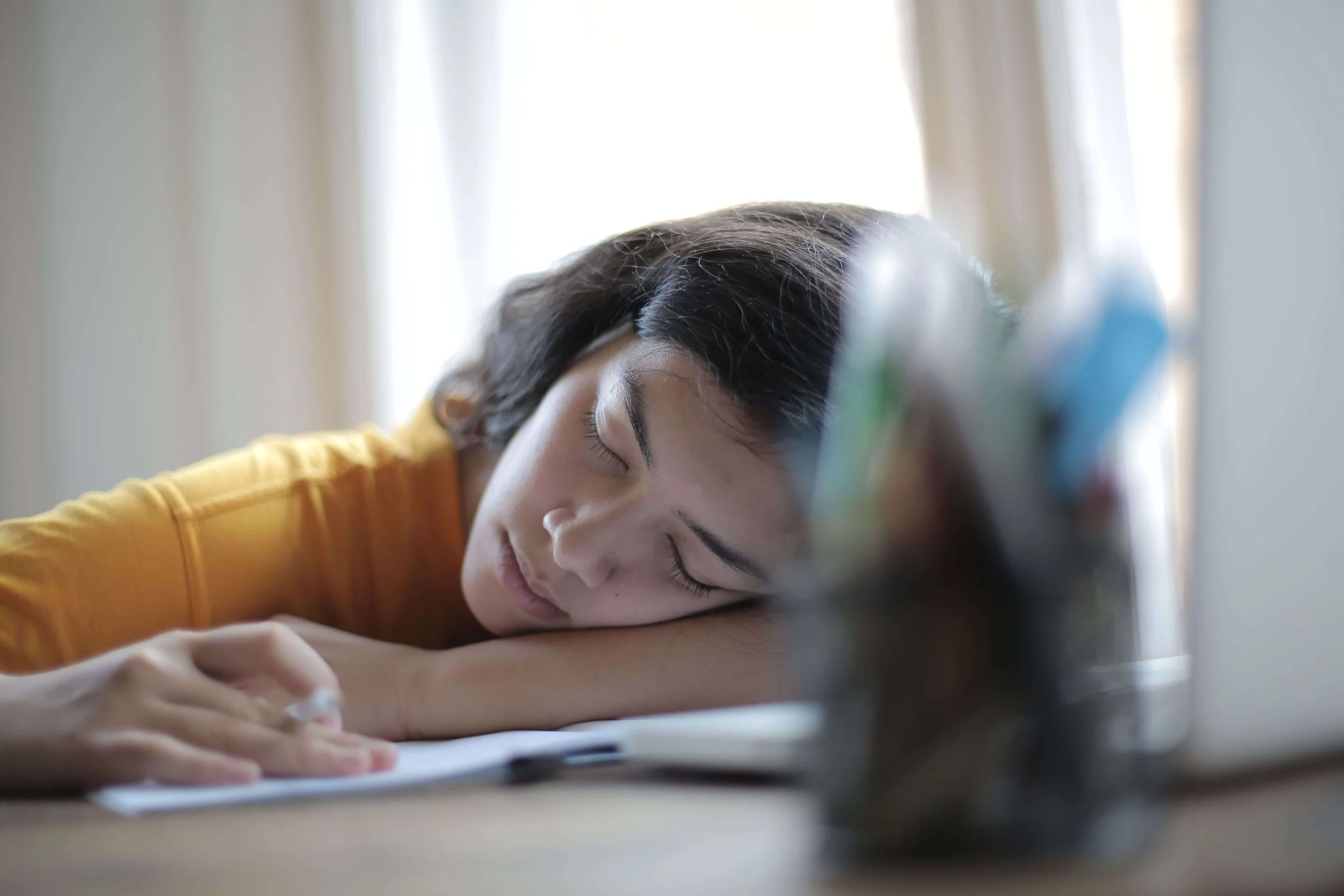
It's 1 a.m. and a thin blue glow is still leaking out from under your teen's door. You know they have to be up in six hours. They know it too. Yet the scrolling doesn't stop. The light stays on, and tomorrow morning you'll be shaking a groaning, exhausted kid awake for the third time before they finally stumble out of bed. If this is a nightly standoff in your house, it may be doing more quiet harm than you think. Poor sleep is one of the most common threads running underneath the teens who come to Ritenour Counseling for teen therapy in San Ramon.
It touches almost everything: their mood, their mental health, their focus, and how they show up at school. Here's what I want you to walk away with. This isn't a lecture about screen time, and it definitely isn't about blaming your teen for being tired. It's about understanding what's actually happening when a teenager doesn't sleep, and what genuinely helps.
How Much Sleep Do Teens Actually Need?
Most teenagers need eight to ten hours a night. However, the large majority are running on far less. The reason isn't only stubbornness or bad habits, though those play a part. During adolescence, the body's internal clock shifts later, so a teen genuinely does not feel sleepy at the hour that used to send them to bed. Their biology pushes them to stay up, and then the school bell drags them out of bed before their body is anywhere close to ready.
That collision produces a chronic sleep debt that most teens never get the chance to repay. Studies on teen sleep deprivation point to just how many adolescents fall short on a typical school night. Keep that biology in mind the next time your teen looks wrecked at breakfast. Their exhaustion is real, and it's not simply a matter of choosing to go to bed earlier.
What Losing Sleep Does to the Teenage Brain
Sleep is not downtime. It is when the teenage brain does its heaviest lifting, and cutting it short interferes with nearly all of that work. The first system to suffer is emotional control. Run a teen short on sleep and their ability to manage feelings drops, which is why an exhausted kid is so quick to snap, spiral, or fall apart over something that would barely register on a rested day. Learning takes a hit next, because the brain uses sleep to lock in what it absorbed during the day, so a night of poor rest can quietly erase hours of studying.
Add slower focus, foggier thinking, and a weaker immune system, and the picture gets clearer. What happens when teens skip sleep reaches into corners of their life that seem to have nothing to do with bedtime. This reframes a lot of behavior parents write off as attitude. That flat, checked-out, irritable version of your teen is often just a brain that has not been allowed to recharge.
Why Sleep and Anxiety Trap Teens in a Cycle
Sleep and teen anxiety don't just coexist. They actively fuel each other, and that cycle is one of the most useful things for a parent to understand. Picture it as a wheel turning in the wrong direction. A short night leaves the brain worse at managing fear, so a tired teen defaults to worst-case thinking and everything feels bigger and scarier than it is.
That heightened anxiety then follows them to bed, where a mind stuck in worry refuses to switch off, which steals even more sleep. Around and around it goes, each rotation deepening the last. Research on what happens when teens don't get enough sleep connects that shortfall to rising anxiety and depression, and the same wheel turns for low mood as well.

The Cycle Can Turn the Other Way
There is real encouragement buried in this, though. A wheel that spins one direction can be turned the other way. Restore some sleep and anxiety often loosens its grip. Ease the anxiety and sleep tends to return. That's exactly why this issue is worth tackling head-on rather than hoping your teen grows out of it.
The Hidden Toll on School
By the time poor sleep reaches the classroom, it rarely announces itself as a sleep problem. It shows up as slipping grades, a shorter fuse, and a kid who seems to have stopped trying. A running-on-empty teen can't hold focus on academics, fights to stay awake through a lecture, forgets assignments, and loses patience with teachers and friends alike.
Their grades drift down in a way that doesn't match what they're capable of. And in a place as driven as ours, the irony cuts deep. Teens routinely trade sleep for extra study time, and the missing rest then undermines the very grades they stayed up chasing. The answer they need is usually counterintuitive. Not more hours awake, but more hours asleep.
How Can I Help My Teen Sleep Better?
The most effective changes target two things: the routine and the phone. Screens are almost always the loudest part of the problem. Anchor the whole week to a steady sleep and wake time, weekends included, because a schedule that lurches around keeps the body clock permanently confused. Move screens out of the bedroom, or at minimum agree on a real cutoff, since late-night scrolling and blue light are actively fighting against sleep.
Make the room cool, dark, and dull enough to be boring. Pull back on caffeine after midday. Give your teen an actual wind-down stretch, because no one, least of all a wired teenager, drops straight from full speed into sleep. If there's a single principle underneath all of it, it's this: make it a joint project, not a set of rules handed down from above. A teen who feels policed will push back on every point, while a teen who understands what sleep is doing for their brain is far more willing to meet you halfway.
When the Problem Runs Deeper Than Habits
Sometimes a teen does everything right and still lies awake. When better habits don't move the needle, or when the sleeplessness arrives hand in hand with worry and low mood, sleep is likely the symptom rather than the source. A few things suggest that's what you're seeing. Maybe your teen keeps a solid routine and stays wide awake anyway.
Sleeplessness braided together with constant worry or sadness. A tiredness that never lifts, no matter how early lights go out. Or a mind that clearly won't stop racing long enough to rest. In situations like these, tuning up sleep hygiene alone won't get you far, because something underneath is generating the wakefulness. That's the point where a teen therapist in San Ramon can help you figure out what's really going on.
How Therapy Helps a Teen Rest Again
When sleep won't come because a teen's mind won't quiet down, therapy works on the mind. That's the part sleep hygiene alone can't reach. A therapist teaches a teen how to interrupt the racing, spiraling thoughts that arrive the moment the lights go off. They also work on the anxiety that both steals sleep and worsens without it.
That means concrete tools like slowing a runaway worry, questioning the worst-case story, and calming a body that's stuck in high gear at midnight. Often the real driver is quieter than anxiety. It's the perfectionism or people-pleasing that has a teen convinced they have to earn their rest by finishing everything first, and that belief is worth examining head-on.
A Proven Treatment Built for Sleep

For sleep itself, there's a specific, well-established approach worth knowing about. Cognitive Behavioral Therapy for Insomnia, or CBT-I, is widely recognized as the first-line treatment for chronic insomnia. Rather than relying on medication, it retrains the habits and thought patterns that keep a person awake, gradually resetting the body's relationship with sleep over a handful of weeks. It works even when insomnia shows up alongside anxiety or low mood, which is exactly the tangle so many teens are caught in. That makes it a natural fit for the kind of layered, one-thing-feeds-another struggles I see most.
A Note on Specialized Insomnia Care
I'm currently completing training with faculty from Stanford Medicine's Sleep Health and Insomnia Program (SHIP). The focus of that work is Cognitive Behavioral Therapy for Insomnia, or CBT-I. It's the treatment most sleep organizations consider the gold standard for chronic sleep problems. Beginning in Fall 2026, I'll be opening availability for clients who want to treat their insomnia directly through CBT-I. If that's something you think could help your teen, or you, you're welcome to reach out to learn more.
The teen therapy in San Ramon that we provide starts with what's actually keeping your teen awake and builds outward from there. If exhaustion is dragging down their mood, their health, or their grades, and better habits at home haven't been enough, a teen therapist can help.
Is Poor Sleep Taking a Toll on Your Teen? A Teen Therapist in San Ramon Can Help.
If exhaustion has left your teen anxious, moody, or falling behind, they don't have to stay caught in that cycle, and you don't have to untangle it by yourself. At Ritenour Counseling, we help teens reach the stress and anxiety so often driving their sleep struggles, and we hand them tools that lift both rest and mood. Therapy for teenagers in San Ramon gives your teen space to quiet their mind, break the cycle, and start meeting their days with more of themselves intact.
You've already taken a meaningful step by paying attention and asking these questions. Whether you're ready to get started or just want to learn more about how we work, we're here with compassion, no pressure, and a real understanding of what families in this community are navigating.
Begin by scheduling a 15-minute consultation online or by calling (925) 212-8014
Learn more about our approach to teen therapy and how we support teens navigating anxiety, mood, and stress
Connect your teen with a teen therapist in San Ramon who understands how much rest shapes everything else
Other Services Offered by Ritenour Counseling in San Ramon, CA
Helping your teen sleep and feel better is often part of a larger journey toward a more grounded, resilient sense of self. At Ritenour Counseling, we recognize that these struggles rarely show up in isolation. Poor sleep, anxiety, low mood, perfectionism, people-pleasing, and teen social comparison tend to feed one another. Our goal is to provide support that meets what your teen and family are experiencing right now and adapts as those needs change.
At Ritenour Counseling, every clinician participates in twice-weekly case review sessions with a licensed therapist, ensuring your care is continuously informed by collaborative expertise. Our team is also required to engage in ongoing professional training, so clients benefit from clinicians who are consistently sharpening their skills and staying current with best practices.
Teen therapy in San Ramon is an important part of the care we provide, and it's designed to work as part of a broader, flexible support system. As teens grow and change, the challenges they face shift as well, and therapy can adjust right alongside them.
In addition to supporting teens with sleep and anxiety, we offer a variety of counseling services, including therapy for anxiety and depression, bipolar disorder support, bullying-related concerns, children's therapy, family systems therapy, parent counseling, relationship counseling, couples therapy, stress management, therapy addressing technology and screen time concerns, and support for highly sensitive individuals and people-pleasing.
Change isn't always easy, but you don't have to do it alone. Get in touch today or explore our blog and FAQ page for more insight and support.
About the Author
Michelle Ritenour, LMFT, has been practicing in San Ramon since 2008. Born and raised in the East Bay, Michelle is now raising her own children in the community she's always called home. Before becoming a therapist, she spent 10 years as an elementary school teacher in the local school district, where she saw firsthand how differently a well-rested kid shows up compared to an exhausted one. Michelle's training centered on Family Systems and child/adolescent therapy.
Her approach is warm and empathic, and much of her work focuses on helping teens and young adults who are feeling stuck take a step forward. She brings her friendly and approachable personality to every session, infusing humor and lightheartedness while also being direct when necessary. Michelle creates a safe space where teens feel comfortable getting to the bottom of what's keeping them up at night.